iPhone 13 Pro 1 Week Later! Should You Upgrade?
ESR sponsored this video. Apple announced four iPhones (13 mini, 13, 13 Pro and 13 Pro Max), and I’ve used the 13 mini and 13 Pro for a week. This focuses on the iPhone 13 Pro; what I say should translate to the Pro Max except for battery and screen. (I’m planning a separate 13 mini video.)
Design
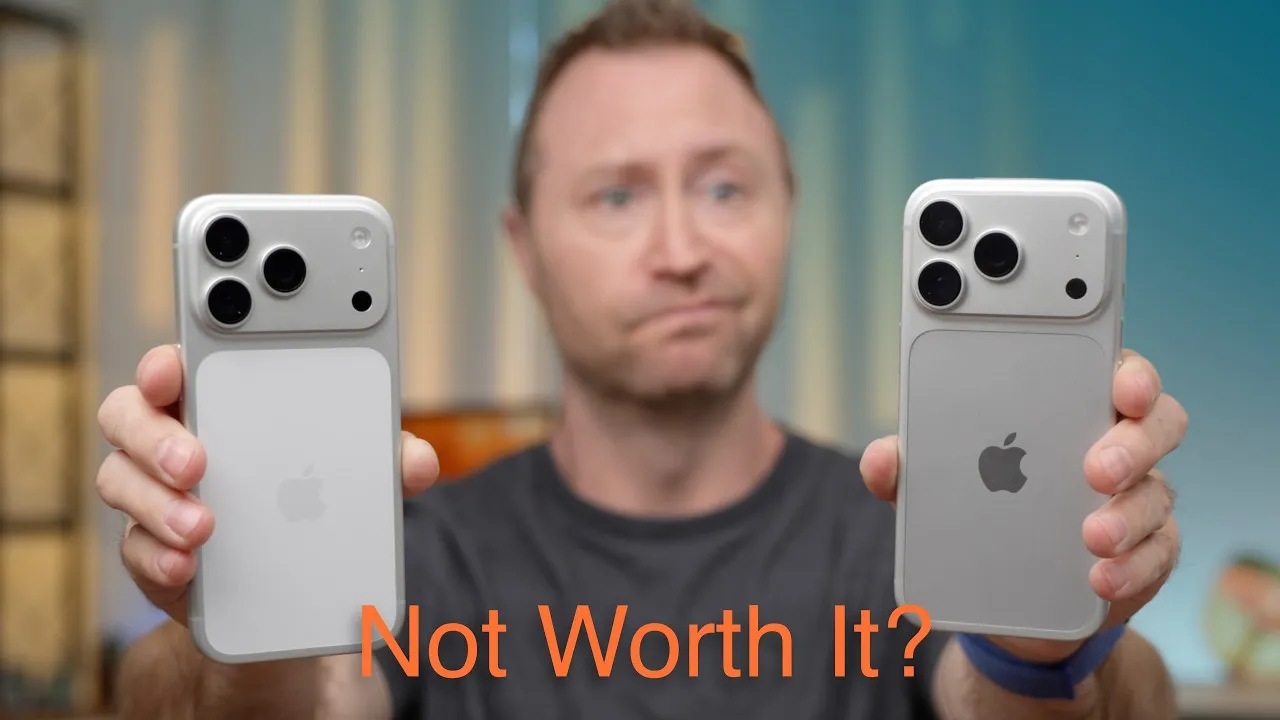
At first glance it’s very similar to the 12 Pro: a 6.1-inch phone starting at $999 with 128 GB, in the new Sierra Blue, silver, gold or graphite. I still love the flat-edge design: the stainless steel sides between front and back glass feel grippable and premium. The notch has the same TrueDepth camera but is 20% smaller, and the back glass has a frosted, almost soft-touch look.
ESR cases and accessories
ESR sent me a few cases, all MagSafe compatible with HaloLock: the ESR Hybrid (following the flat edges, with protection for the display and cameras), the Air Armor Clear Case (military-grade protection and shock-absorbing corners), the Cloud soft case (soft touch with a microfiber lining), a HaloLock kickstand that wirelessly charges on a desk or bedside table, and a HaloLock Magnetic Wireless Car Charger for one-touch mounting. You can save 20% on the cases and 10% on the chargers with the links and codes in the description (and ESR had an iPhone 13 giveaway at the time).
Display
- Brightness: up from 800 to 1,000 nits in normal use (25% brighter). The 12 Pro was already bright enough outdoors, but I’ve had zero issues reading in the bright Texas sun.
- ProMotion: dynamically adjusts the refresh rate from 10 Hz to 120 Hz. It’s nice: text in motion is clearer without blur, and transitions look slightly better (apps need updating, and games can reach 120 Hz). But it’s not as life-changing as I’d hoped. It’s better side by side, and if you look for it, you’ll be happy, but when I go back to the 12 Pro or 13 mini, I don’t think about it. If you’re very sensitive to high refresh rate, it may be the best thing ever, but I don’t think it affects the average user. Every 13 Pro user benefits from better battery life, because the adaptive refresh rate drops to 10 Hz on a static display.
Battery
Apple says 1.5 more hours than the 12 Pro. For me, I end the day around 25% with 6 to 7 hours of screen-on time, without charging during the day, running Twitter, Safari, some benchmarks, camera, Photos and YouTube. My battery anxiety with the 12 Pro is gone; the Pro Max would give even more. Between a slightly bigger battery, a more efficient display and the A15, I think Apple has edged past the point where people need to worry on normal days.
Cameras
Bigger and better in every way, and I mean bigger: cases now need a bump to protect them, and the phone sitting flat without wobbling is out the window. I’m not a professional and don’t edit in Lightroom, so I won’t go through specs; the photos look great, not just phone-great.
- A 3x telephoto, and an ultra wide that is much sharper and cleaner, and a wide with sensor-shift stabilization.
- Macro mode (from the new ultra wide): get as close as 2 cm. The camera switches automatically when you get close (people have complained, but I don’t care; Apple says a button to toggle it manually is coming). The shots are crazy and fun, and I think it will be the number one feature this year.
- Photographic Styles: your own photo look applied as pictures are taken, instead of a filter afterward that can affect skies and skin tones. It’s good to have the option, but I like the default style and will keep it.
- Cinematic mode: AI tracks multiple subjects and selectively blurs, at 1080p, doing an OK job, with edge issues you can fix in the editor afterward (blur amount and focus subject). It’s technically nuts, but I’m having trouble figuring out who it’s for: most users want to pull the phone out and quickly shoot something without thinking, and editing each video to fix focus runs into human laziness. It’ll end with a bunch of 1080p videos with fuzzy hair and ears that never get looked at, instead of regular 4K. It will improve and have use cases (mini movies), but for most people, you’ll try it a couple of times and go back to regular video.
Performance
The A15 has six cores (two performance, four efficiency) and a 5-core GPU. In Geekbench: single-core 1732 (vs. 1592 on the 12 Pro and 1747 on my M1 iMac), multi-core 4635 (vs. 3990), GPU 14,146 (vs. 9,172, because of 5 GPU cores vs. 4). That translates to not much right now: apps don’t open faster, and pages don’t load faster. My LumaFusion export took 4:57 on the 13 Pro vs. 6:11 on the 12 Pro and 6:47 on the 11 Pro. The processor is built for longevity: iOS 15 supports the iPhone 6S from six years ago, so expect the 13 to be supported until at least 2027.
Should you upgrade?
Yes. Year over year it’s incremental, but the update is exponentially bigger for every year older your iPhone is. On what matters (camera, battery life and display), it checks all the boxes: a brighter screen even in the sun, higher-quality photos and videos, and a battery that lasts all day. For these reasons, especially the best photos and videos from your pocket, I recommend upgrading from any previous iPhone. Cinematic mode, ProMotion and upcoming ProRes are icing on the cake. Are you upgrading?
Links
- Classic hybrid case with halolock
- Air armor clear case with halolock
- Cloud soft case with halolock
- Halolock Kickstand Wireless Charger
- Halolock Magnetic Wireless Car Charger
- https://www.esrgear.com/collection/iphone-13
- UNLIMITED Cloud Backup for your Mac with Backblaze
- iPhone 13 Pro
- 2020 iMac
- Bamboo Monitor Stand
- CalDigit SOHO
- CalDigit TS3
- Samsung X5 Thunderbolt SSD
- OWC 32 GB Kit (2x16GB) for 2019-2020 iMac
- MX Master 3 Mouse
- Satechi Magnetic Charger 2-in-1
- BenQ ScreenBar
- Kanto Yu2 Speakers Matte Gray
- Apple Magic keyboard
- Apple Magic Trackpad
- MX Master 3 Mouse
- Desk Mat Moko PU Leather
- MacBook Pro M1
- Samsung UR55 28” display
- MountUP Monitor Arm
- If this was helpful I have a tip jar
- Sony A6400
- Primary Lens Sigma f1.4 16mm
- Secondary Lens Sony f2.8 16-55MM G
- Sennheiser MKH-416 mic
- Zoom F6 recorder
- Rode VideoMic NTG
- iPad Pro 12.9
- Used DJI OSMO 3 Gimbal for some shots
- Tascam DR-10L Audio Recorder with Lav
Some links in this post are affiliate links, which means that if you click on one of the product links, I may receive a small commission. See my ethics statement.