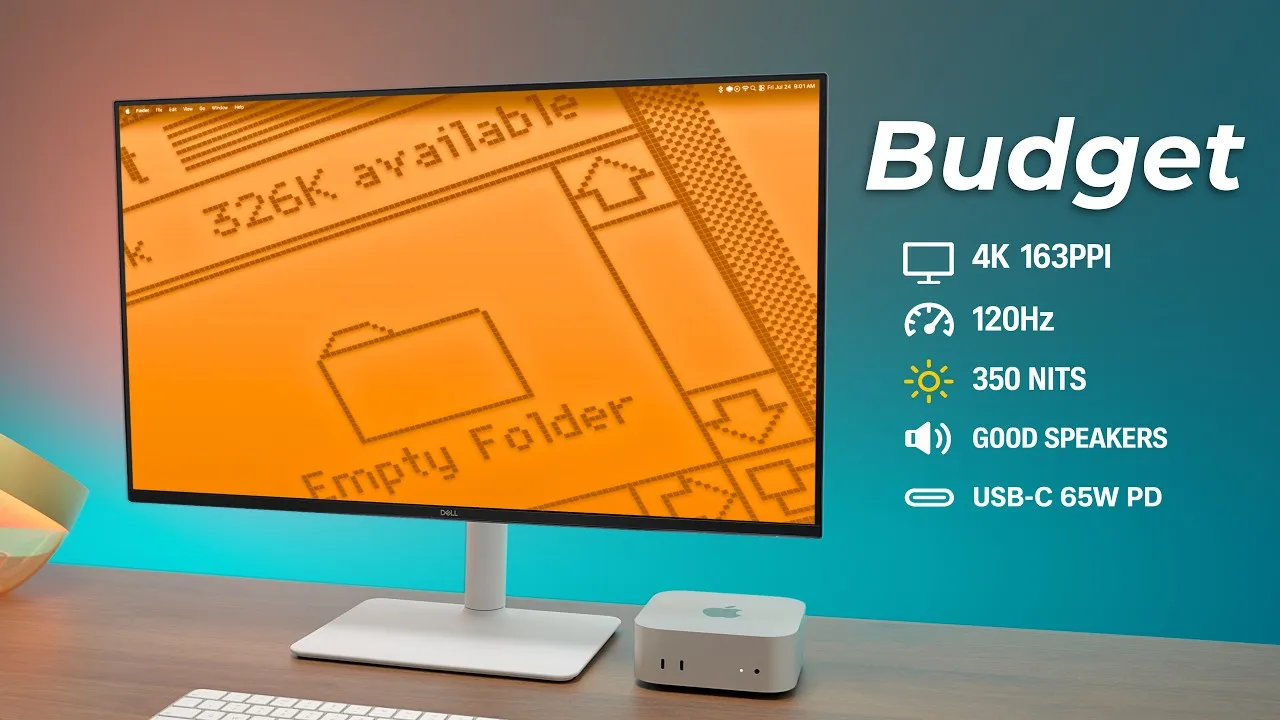
Cheap 5K vs Apple Studio Display in 2025! Best display for your Mac?
If you’re a Mac user who cares about visuals, you’ve probably coveted the Apple Studio Display. But in 2025 you finally have real alternatives: Samsung, ASUS, BenQ, and even the unknown Kuycon have 5K displays that challenge Apple on design, performance, and price.
This video was sponsored by UGREEN.
Design
The Studio Display is still the gold standard. The unibody aluminum is unmatched, and the height-adjustable hinge is so smooth you can move it with your pinky. The Samsung ViewFinity S9 looks nice from a distance, but up close it’s mostly plastic, the stand creaks like an old pirate ship, and it comes with a massive power brick and a short cord. ASUS and BenQ land in the middle: clean and professional, but no design awards, both with a chin, and BenQ’s frame leaves a gap around the bezels where dust can retire. The dark horse is the Kuycon G27P: a full aluminum frame, uniform bezels, and chamfered edges that mimic the Studio Display surprisingly well. It’s not unibody, but it’s a big step up from the plastic parade.
Stands: Apple offers tilt, height-and-tilt, or VESA, and you have to order the VESA version without a stand. Samsung’s stand adjusts fully but is stiff and uneven, and the power cord can get pulled out. ASUS and BenQ get the job done, and BenQ’s is very sturdy. Kuycon’s is one of the best: solid, no wobble, stays put. All the non-Apple displays work with VESA out of the box.
Ports
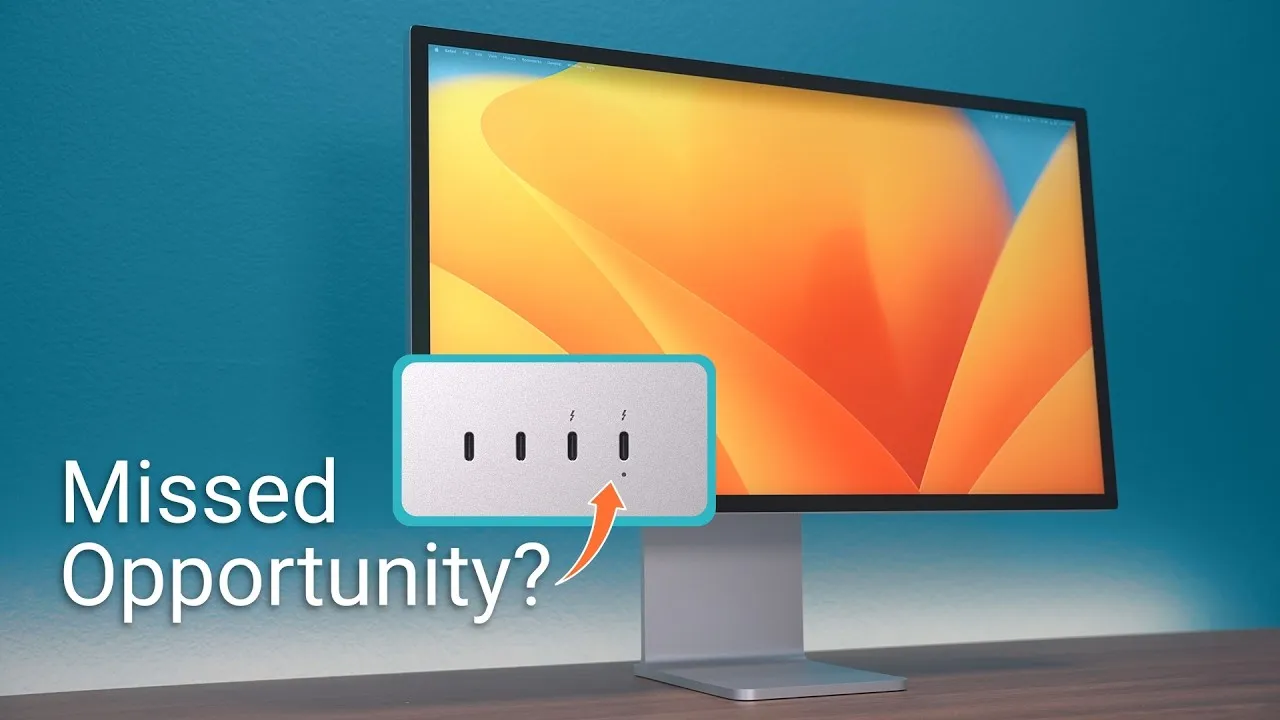
- Studio Display: one Thunderbolt 3 input with 96 W, three 10 Gb USB-C ports. No HDMI, no DisplayPort. Sleek but restrictive.
- BenQ PD2730S: two Thunderbolt 4 (one for daisy chaining), HDMI, DisplayPort, USB-C, multiple USB-A, a headphone jack, 90 W, and KVM.
- ASUS PA27JCV: USB-C with 96 W, HDMI, DisplayPort, extra USB-C and USB-A at 5 Gb/s, KVM and a headphone jack. No Thunderbolt.
- Samsung S9: Thunderbolt 4 with 90 W, three USB-C, mini DisplayPort, but no HDMI or full-size DisplayPort.
- Kuycon G27P: USB-C, HDMI, DisplayPort, two USB-A at USB 2.0 speeds, and a headphone jack.
The panels
Glossy vs matte: Studio Display and Kuycon are glossy, with rich contrast and depth but more reflections, and the Kuycon is noticeably more reflective. Samsung’s nano-texture-style matte resists reflections well, BenQ’s matte is excellent without looking grainy, and ASUS’s shows slight rainbow artifacts on light backgrounds.
Brightness: Studio Display 570 nits, Kuycon 704, Samsung nearly 600, ASUS and BenQ around 400–500 depending on settings. The ASUS dims toward the edges, and the BenQ only gets brighter with uniformity mode off.
Color: they’re all really good. Nitpicking the differences is a waste of time; consumer, prosumer, or creator, you’ll be happy with the color on every one of these.
Backlight consistency: the Studio Display wins, and BenQ is solid. The Kuycon looks good to the eye but measured a 29% corner-to-corner brightness variation. ASUS and Samsung had distracting backlight bleed in letterboxed video. It’s luck of the draw, but if it bothers you, stick with Apple or BenQ.
Refresh: all 60 Hz, except the Kuycon at 75 Hz. A nice little bonus, but not ProMotion.
Mac integration and extras
The Studio Display leaves everyone in the dust: True Tone, auto brightness, and keyboard volume and brightness. BenQ gets close with Display Pilot. For the rest, the free MonitorControl utility gives you keyboard brightness. The Studio Display’s six speakers are better than they should be, and most people won’t need external speakers. Samsung’s are thin, ASUS and BenQ sound like a cereal box, and the Kuycon has none. The Studio Display camera is mediocre but usable, Samsung’s detachable 4K camera underwhelms, and the others have none.
Price
- Studio Display: $1,599 MSRP, often $1,299 for the tilt version. Height adjustment is $400 more and rarely on sale.
- BenQ PD2730S: launched at $1,199, now about $1,499 because of tariffs.
- ASUS PA27JCV: launched at $799, now about $849.
- Samsung S9: started at $1,599, around $999 before tariffs, as low as $699 on sale.
- Kuycon G27P: $799 plus $189 for the stand, just under $900 bundled.
My take
If you want the best Mac display experience and don’t want to think about anything, the Studio Display is still king, and tariff pricing on the others makes it even more compelling. Apple’s support is best in class. If you want the best value, the Kuycon shocked me: bright, accurate, well built, under $1,000, though long-term support and warranty are unclear at best. BenQ is great if you need calibration tools and daisy chaining. ASUS is OK for a basic budget 5K. And Samsung tries to be the jack of all trades and masters none.
Links
- UGREEN Nexode 500W Desktop Charger(USA: $30 OFF)
- More UGREEN Chargers(USA: up to 33% off)
- More UGREEN Chargers (Canada: up to 30 % off)
- UGREEN Deals (Canada)
- UGREEN Official Store (up to 33% off)
- Kuycon G27P
- BENQ PD2730S
- Studio Display
- Asus PA27JCV
- Samsung ViewFinity S9
- Affordable 5K Display for Mac: ASUS ProArt PA27JCV
- The Everyday Mac Display - BENQ MA270U
- Samsung ViewFinity S9 5K vs Apple Studio Display
In this video
Some links in this post are affiliate links, which means that if you click on one of the product links, I may receive a small commission. See my ethics statement.