Apple Studio Display: 6 Reasons It's Worth It!
The internet is booing the Apple Studio Display: no high refresh rate, no local dimming, no proper HDR. When Apple announced it, it was the product I was most excited about. We’ve waited years for a standalone Apple display that doesn’t cost $5,000 without a stand, with Retina quality, a good design, great features and Apple’s consistency. People are upset about what it doesn’t have without considering what it does. Here are six reasons to reconsider.
1. The design
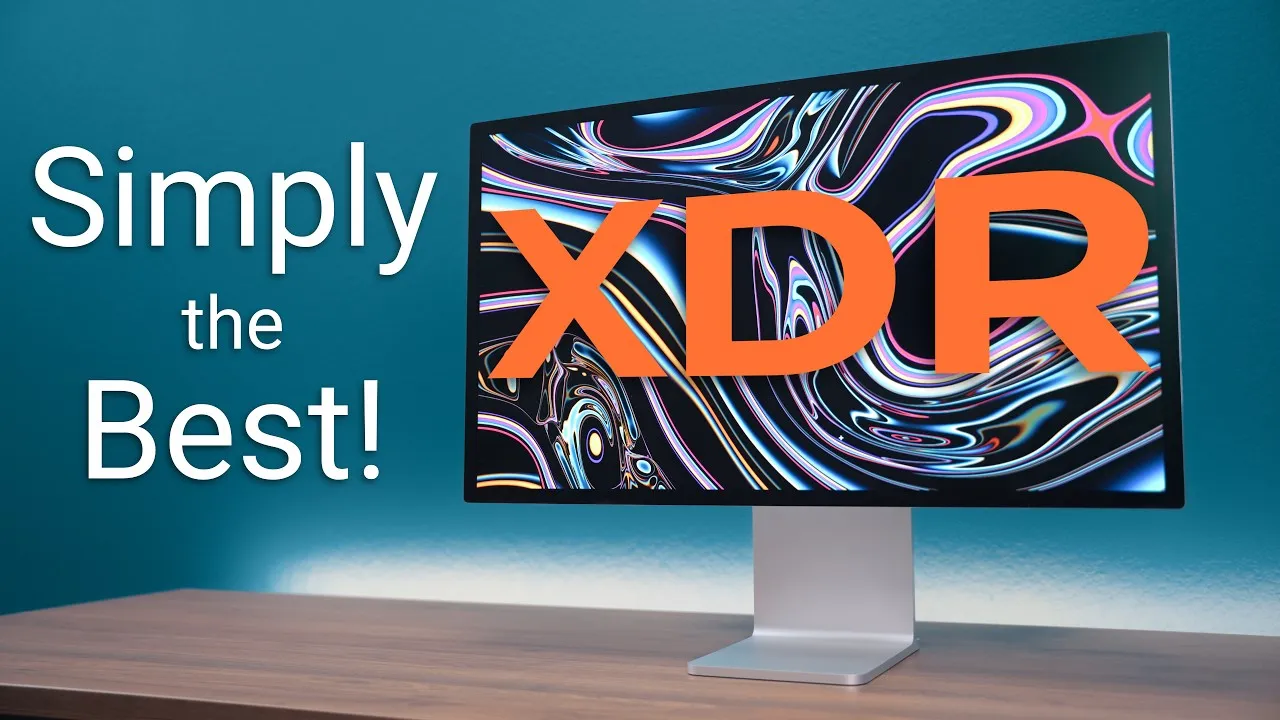
It looks amazing from all sides: a solid unibody look with flat sides, sharp edges, and perforations at the top and bottom for the fans and speakers. Nearly every other display is plastic, mostly black, some with weird gaming colors; if that’s your thing, more power to you, but it’s not the same market.
There are three stand options: tilt, height and tilt, or VESA. I went with height and tilt, and it’s awesome: it moves so smoothly you can adjust it with one finger, unlike so many plastic stands, and it barely moves when I shake the desk. The tilt stand and the lowest setting of this stand are lower than the iMac’s, so you may want a monitor stand like the Kalibri I’ve used for about a year. The one complaint: the bezels could be a little thinner (about the same as the 24-inch iMac’s), but it’s 2022.
2. 5K resolution
There are hundreds of 4K displays, and many say 4K is plenty, and I’d partly agree, but at 27 inches 5K is just right for a Mac: 218 ppi, so scaled to 2560 by 1440, text and icons are the right size without losing sharpness. A 4K display scaled to 2560 by 1440 isn’t as sharp. Eyes vary, but there’s a clear winner.
3. Color accuracy and consistency
Each display is factory calibrated and looks bright and beautiful out of the box, and I can feel confident it will look like all my other Apple displays (MacBook, iPad, iPhone). A video or photo I edit on one looks the same on the others. Other displays are factory calibrated too, like my Eve Spectrum 4K, but its colors are quite different from the MacBook Pro’s and the Studio Display’s; I can adjust the white balance, but probably never perfectly. Since many of my viewers are on Apple devices, I know my exports will look right, or at least the same. (I’m not claiming to be a great colorist; if it looks good on these displays, it will probably look good on most.)
4. Camera, microphones and speakers
Rare in a display, and basically impossible to find all three good.
- Camera: awful right now. We’ve all seen the reports, and Apple has promised a fix. If camera quality matters to you, hold off. For me it’s the feature I need least: I take 5 to 12 meetings a day, but almost never on video.
- Microphones: an array of three “studio” mics that sound perfectly acceptable for most non-podcast scenarios.
- Speakers: six speakers (two sets of force-canceling woofers and two tweeters) with spatial audio. They can’t replace desktop audio monitors for real audio engineering, but they sound better than they should in an enclosure like this: a clear low end that surprised me, with mids and highs that never distort at high volume, slightly better to my ears than the 24-inch iMac’s. For a clean desktop setup, they fit the bill.
5. macOS integration
You can control volume and brightness from the Mac keyboard (even more granularly with Shift and Option), with no fiddling with an on-screen display and no double amplification from setting Mac and display speaker volume separately. There’s also True Tone and auto-brightness, which on third-party displays is generally terrible, slow and in big steps. (I don’t use either because of color grading, but most people will.) And with a single cable, it charges a laptop at up to 95 W, more than most displays, which hover around 65 W.
6. Instant wake
Watch how fast the Mac Studio wakes the display, almost instantly, and the same with a MacBook Pro: tap the keyboard or Touch ID and you’re running. Other displays take many multiples of that, whether over USB-C, HDMI or DisplayPort.
Verdict
These are the reasons it’s worth it to me, for now. You’ll have to weigh them against a cheaper display or one with the features you want. For me, it offers more than any other display that doesn’t cost $4,000 or more. Would I like ProMotion, local dimming and better HDR? Sure, and if Apple releases a display with those, I’ll consider it. Are there enough benefits for you?
Links
- Buy the Studio Display
- Bamboo Monitor Stand
- Buy the Mac Studio
- UNLIMITED Cloud Backup for your Mac with Backblaze
- 16” MacBook
- Dell S2722QC
- Bamboo Monitor Stand
- CalDigit TS3
- CalDigit TS4
- CalDigit 10Gb Ethernet
- Synology NAS
- OWC Envoy Pro FX SSD
- AirPods Max
- AirPods Max Stand (ETSY)
- Kanto YU2 Speakers
- Satechi Magnetic Charger 2-in-1
- If this was helpful I have a tip jar
- My Camera
- Secondary Lens
- Sennheiser MKH-416 mic
- Zoom F6 recorder
- Rode VideoMic NTG
- Used DJI OSMO 3 Gimbal for some shots
- Tascam DR-10L Audio Recorder with Lav
Some links in this post are affiliate links, which means that if you click on one of the product links, I may receive a small commission. See my ethics statement.