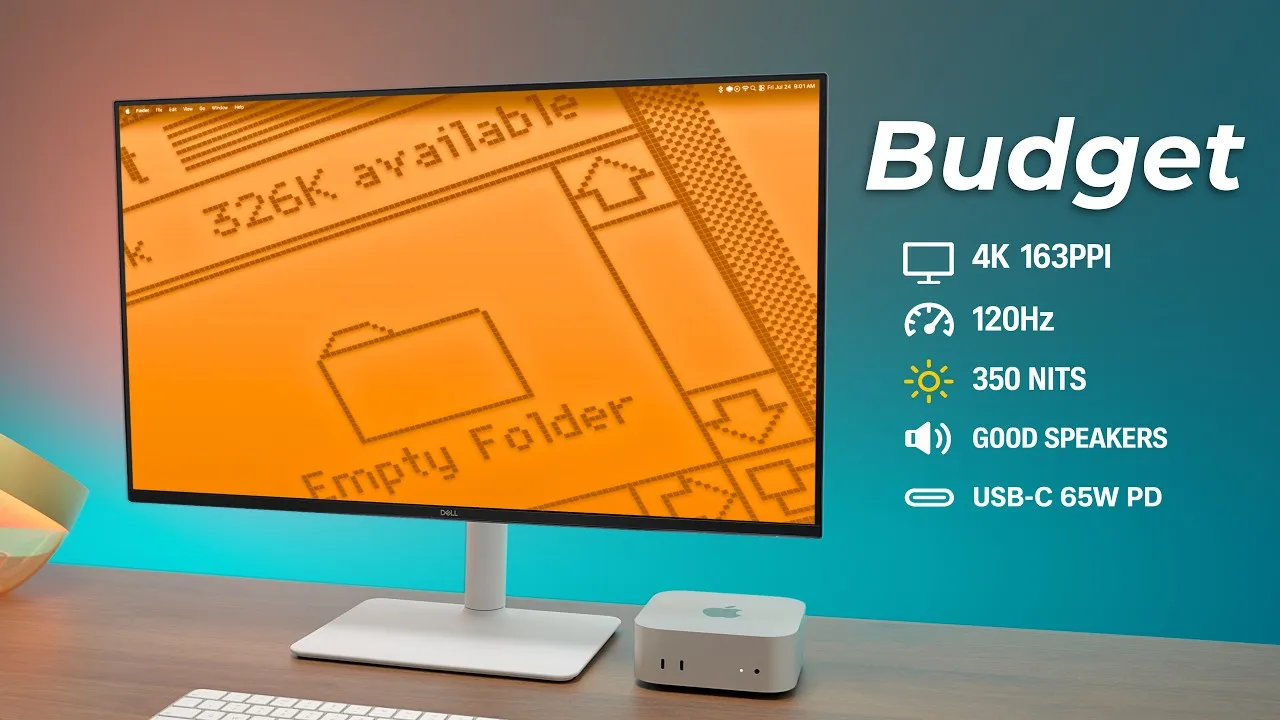
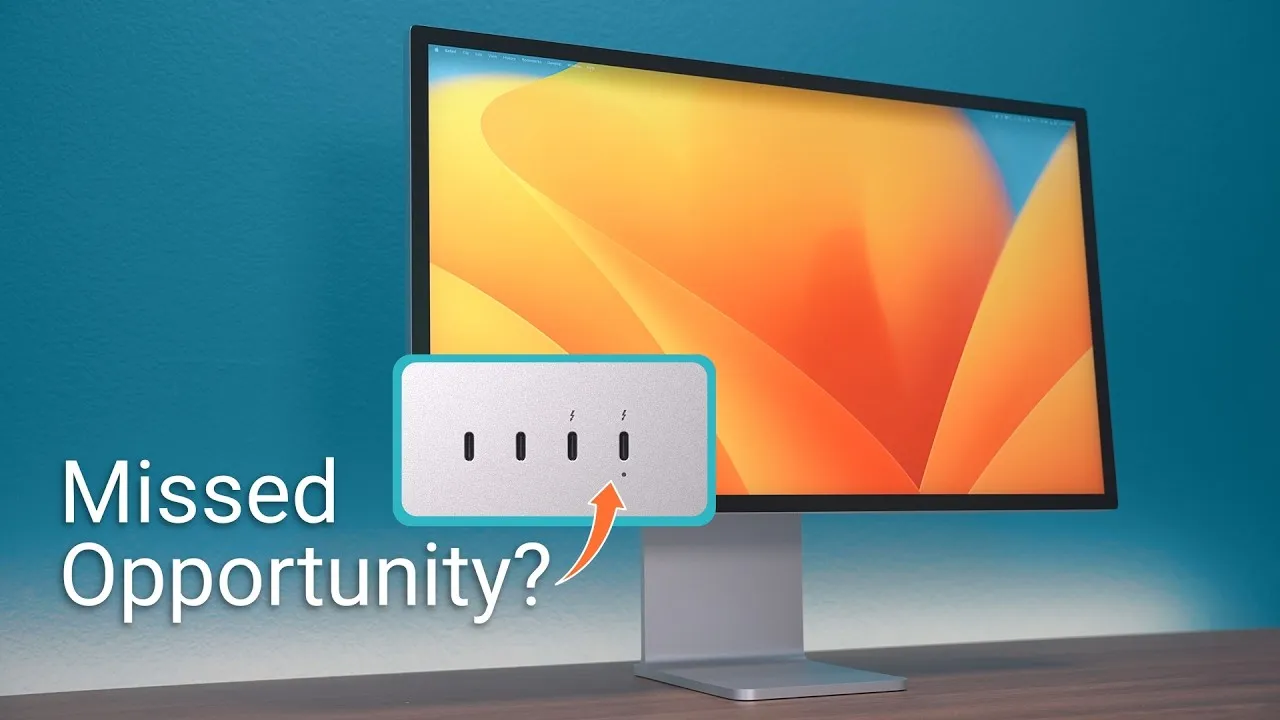
Samsung ViewFinity S9 5K vs Apple Studio Display
As Mac users, we’ve waited for alternatives to the 5K Studio Display and the poorly designed, discontinued LG UltraFine. Now Samsung has released the ViewFinity S9, a 5K Thunderbolt 4 display. I’ve compared it with the Studio Display for a couple of days.
Price and features
Both cost $1,600 and are 27-inch 5K, which is disappointing; an option under $1,000 would be great. To be fair, the comparable height-adjustable Studio Display is $2,000, which is the one I have.
- S9: matte finish, fully adjustable stand, a snap-on 4K webcam, 90 W over Thunderbolt, and a mini DisplayPort out.
- Studio Display: tilt stand, glossy glass (nano-texture is $300 more), a built-in 1080p camera, and 96 W over Thunderbolt.
Both include speakers and USB-C ports on the back.
Unboxing and setup
The S9’s unboxing is the generic, so-so experience of every non-Apple display: a plain box with parts randomly placed, a stand to assemble before attaching it, and a huge power brick (it dwarfs my iPhone 14 Pro). Then about a 10-minute setup, because it’s a smart display. The Studio Display is: open the box, pull it out, plug it in. No external brick.
Design and stand
At a glance they’re similar: silver with a black bezel, though the S9 has a stick-on camera popping up behind. The S9’s bezel is thinner and more modern-looking, but Apple is far ahead on materials. The S9’s whole case is plastic except for the stand’s bottom plate; the Studio Display is all aluminum with a solid one-piece stand (look at that hinge) and a bit more resistance to wobble.
The S9 stand adjusts for height and tilt, rotates a full 90° for a vertical display, and lets you level it. But the height adjustment isn’t smooth: it creaks, small adjustments are difficult, and the power cord pulled out multiple times while I adjusted it. The Studio Display adjusts with one finger, smoothly, with no creaking.
UGREEN sponsored this video.
The display
For Mac users who want a 27-inch display where everything is the right size without scaling artifacts, a second 5K option is great, even at this price. Both are crisp at 218 ppi and look much better than a 4K at the same size. Both reach 600 nits, enough in a bright room, though at full brightness the Studio Display looks slightly brighter.
- Finish: the S9’s matte finish reflects less light than the glossy Studio Display. It’s personal preference and depends on your lighting; with uncontrollable lights behind you, matte may be better.
- HDR: both use regular LED backlighting, but the S9 supports HDR600, and with full-screen HDR it had better dynamic range, with more shadow detail and brighter highlights.
- Backlight: the Studio Display controls bleed much better, though not perfectly (it has a slight blue tint, but still looks better on letterboxed video). The S9 has more artifacts and bleed around the panel.
- Uniformity: cycling through colors, the Studio Display is more consistent. In normal use, with videos and photos, I haven’t noticed it, and the colors look great on both.
- Color: I used the P3 preset on the S9, which looks very similar to the Studio Display. It also has a smart calibration where you hold your phone to the display for what seems like forever; calibrated did look better.
Speakers
A massive difference. The S9 has two 5 W speakers that fire from the rear, an odd choice; the Studio Display has a six-speaker system with force-canceling woofers, firing downward, with spatial audio. There’s no sugar-coating it: the S9’s speakers are terrible, with no bass and a very restricted range, which is awful for a smart display meant for entertainment. You also can’t fix it by connecting external speakers to the display.
Camera
The S9’s camera is a 4K sensor attached with magnets, with a physical lens cap for privacy, or you can remove the module. You can adjust it vertically, but the video, like the speakers, is underwhelming. To be fair, the Studio Display’s 1080p camera isn’t great either, so if you need good video, add a third-party camera.
Sleep and wake
A problem with many third-party displays, but acceptable here. The S9 wakes in a relatively short time and has never failed to wake. When going to sleep or disconnecting, a 30-second timer pops up, which is a little annoying, but it does shut off.
What each does better
The Studio Display has macOS integration: auto-brightness and control from the Mac keyboard. Being able to easily control brightness and volume from the keyboard is something I almost can’t live without. On the S9, it means fiddling with menus, hunting for the picture settings, and finding the remote or the little joystick behind the display for volume.
The S9 is a smart display, like a Samsung smart TV: download Netflix and Hulu, watch live TV with Samsung TV Plus, use it as an AirPlay destination, make video calls without a computer, or use the Gaming Hub to pair a controller and play cloud games without a computer. In my testing, cloud gaming worked as well as expected: the quality adjusted frequently, sometimes dropping to 720p or lower, probably the service’s doing.
Verdict
As displays, both are good, with similar colors and brightness, and sharp 5K. Nitpicking, the Studio Display is more consistent in backlight and color, with better build quality, design, speakers and Mac integration. The S9 has a matte display, smart features, and 90° rotation.
Can I recommend the S9 over the Studio Display? No. At this price, I don’t see a reason to choose it. If you want to save space by combining display and computer, just use the computer attached to the display; the apps and gaming can be done there without the clumsy smart TV interface, and the poor speakers make it a bad media device. The Studio Display has a slightly better picture and way better speakers. The only advantage I can see is matte, but if you’re spending $1,600 anyway, pony up the extra $300 for nano-texture.
If the S9 were $899, it would be a no-brainer, because it feels like a $500–600 display plus 5K. It’s more a competitor to the discontinued LG 5K, priced as a premium display, which it isn’t.
Links
- Ugreen Nexode 65W 7-in-1 Charging Station (31% OFF)
- Ugreen New School Deals to Save up to 30%
- Samsung ViewFinity S9
- Studio Display
- wallpaper
- Apple Studio Display 3 Months Later: The Best Mac Display?
- My Charging Partner: Ugreen Amazon store
- My Case Partner: Pitaka
- https://twitter.com/jerryschulze
- https://www.threads.net/@jerryschulzeonyt
- https://mastodon.world/@jerryschulze
- https://bsky.app/profile/jerryschulze.bsky.social
- My iPhone Art
- Grovemade Desk Mat and Knife (save 10% JERRY10)
- UNLIMITED Cloud Backup for your Mac with Backblaze
- Best Laptop
- Best iPad
- Mac Studio
- Studio Display
- Bamboo Monitor Stand
- Synology NAS
- RocketQ NVME SSD
- ACASIS NVME enclosure
- OWC Envoy Pro FX SSD
- CalDigit TS4
- Logitech MX Keys Mini
- Apple Magic Trackpad
- Logitech MX Master 3
- AirPods Max
- AirPods Max Stand (ETSY)
- Kanto YU2 Speakers
- Satechi Magnetic Charger 2-in-1
- My Camera
- Secondary Lens
- Sennheiser MKH-416 mic
- Zoom F6 recorder
- Rode VideoMic NTG
- Used DJI OSMO 3 Gimbal for some shots
- Tascam DR-10L Audio Recorder with Lav
Some links in this post are affiliate links, which means that if you click on one of the product links, I may receive a small commission. See my ethics statement.