First impressions of the new M1 powered iPad Pros announced at the Apple Spring Loaded Event!
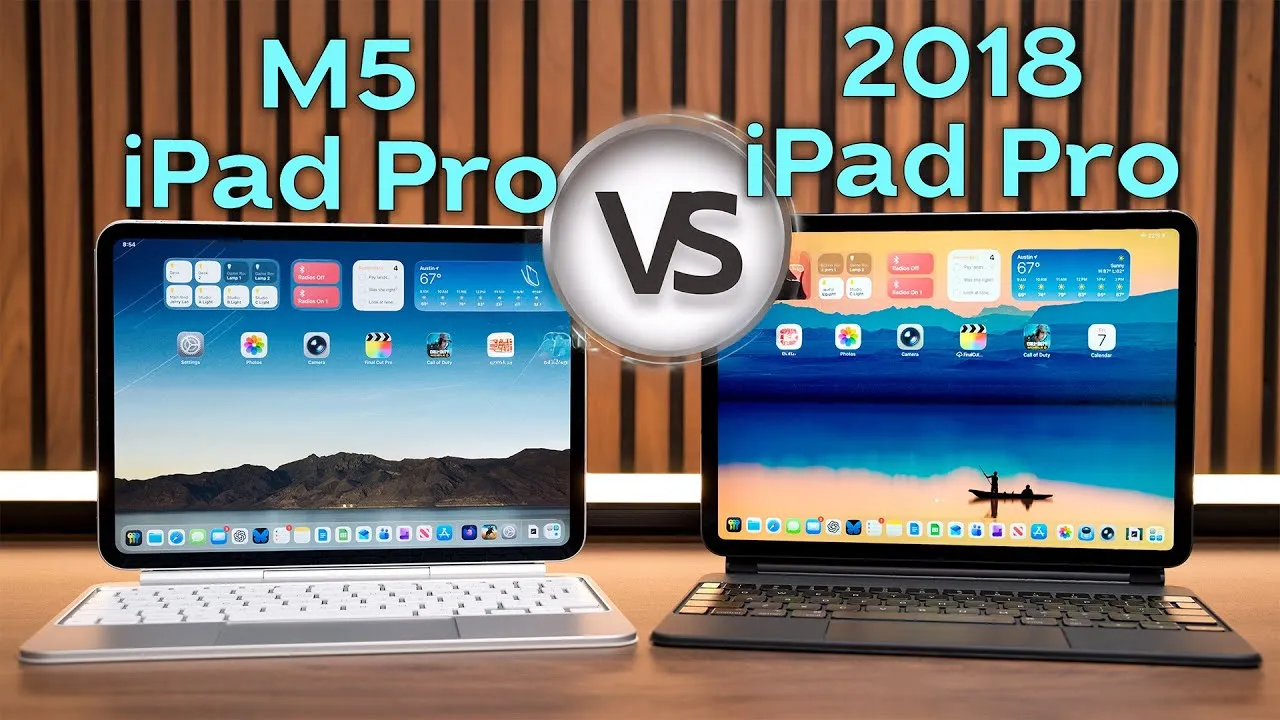
Apple announced the 2021 iPad Pros (11 and 12.9-inch) with new storage options, connectivity, displays, cameras and the M1 chip. My first impression: one seems better than the other. For the first time, Apple made the 12.9-inch display better than the 11-inch.
The M1
It was a real surprise: everyone expected an A14X or some A-series chip. Instead, Apple put the actual M1 (the chip in the new 24-inch iMac, Mac mini, MacBook Air and 13-inch MacBook Pro) in the iPad Pro: the same eight CPU cores and eight GPU cores, and a 16-core Neural Engine. Apple says it’s up to 50% faster than the A12Z in the previous iPad Pro from about a year ago.
Because it’s the M1, you get real Thunderbolt (up to 40 Gbps): fast SSDs and the Pro Display XDR at full native 6K resolution (not the cutoff version), which could be game-changing for people who want the iPad as their main computer.
5G, storage and cameras
- 5G: supposedly blazing fast, though I haven’t found a good place in the Austin area with 5G speeds on my iPhone 12 and 12 Pro.
- 2 TB: a new configuration, but it will cost you: an upgrade price of about $1,100. For video editing with large 4K files, it seems a good one-device option; if I still used LumaFusion for bulk editing, I’d consider it.
- Cameras: no portrait-mode camera on the long side for the Magic Keyboard, but there’s a new ultra wide front camera with Center Stage, which keeps you centered as you move around, widening to include someone else who enters. The back still has the wide and ultra wide cameras and LiDAR, and the M1 improves image processing, including low-light photos and Smart HDR 3.
Displays
- 11-inch: continues with essentially the same screen as the last two generations: 600 nits, True Tone, ProMotion and P3. It’s no slouch: my 2018 12.9-inch has the same display, which I have no complaints about.
- 12.9-inch: a much-upgraded Liquid Retina XDR display with over 10,000 mini LEDs as the backlight, reaching 1,600 nits peak brightness (vs. 600), a 1,000,000:1 contrast ratio (basically OLED specs), P3, ProMotion and True Tone. The iPad is still just 6.4 mm thin, and the LEDs are broken into 2,500 local dimming zones to keep bright areas bright and dark areas dark, for truly dynamic HDR.
Design
Pretty much the same as the previous generation (the same flat design with the square camera bump from the 2020 model); the 12.9-inch weighs about 1.5 pounds, slightly heavier.
Verdict and pricing
A really good update: the M1 (up to 50% over the A12Z), Thunderbolt for accessories, new cameras with Center Stage and, on the 12.9-inch, the XDR display I’m excited to try. Pricing: the 11-inch starts at $799 (Wi-Fi, 128 GB) and the 12.9-inch at $1,099, a bit of an increase for the same 128 GB. You can add cellular for 5G and up to 2 TB for a small $1,100 fee. What questions do you have?
Links
- If this was helpful I have a tip jar
- CalDigit SOHO
- CalDigit TS3
- CalDigit USB-C HDMI Dock
- CalDigit Pro Dock with DisplayPort
- CalDigit Element Hub
- Buy the 2020 iMac
- Bamboo Monitor Stand
- Samsung X5 Thunderbolt SSD
- OWC 32 GB Kit (2x16GB) for 2019-2020 iMac
- Twelve South Backpack for iMac
- Satechi Aluminum iMac Data Hub
- Samsung QVO 4TB SSD
- Cable Matters USB-C 3.1 Enclosure
- MX Master 3 Mouse
- Satechi Magnetic Charger 2-in-1
- MacBook Pro M1
- Samsung UR55 28” display
- MountUP Monitor Arm
- BenQ ScreenBar
- Kanto Yu2 Speakers Matte Gray
- CalDigit SOHO
- CalDigit TS3
- Apple Magic keyboard
- Apple Magic Trackpad
- MX Master 3 Mouse
- Desk Mat Moko PU Leather
- Sony A6400
- Primary Lens Sigma f1.4 16mm
- Secondary Lens Sony f2.8 16-55MM G
- Sennheiser MKH-416 mic
- Zoom F6 recorder
- Rode VideoMic NTG
- iPad Pro 12.9
- Used DJI OSMO 3 Gimbal for some shots
- Tascam DR-10L Audio Recorder with Lav
Some links in this post are affiliate links, which means that if you click on one of the product links, I may receive a small commission. See my ethics statement.