Apple Studio Display 3 Months Later: The Best Mac Display?
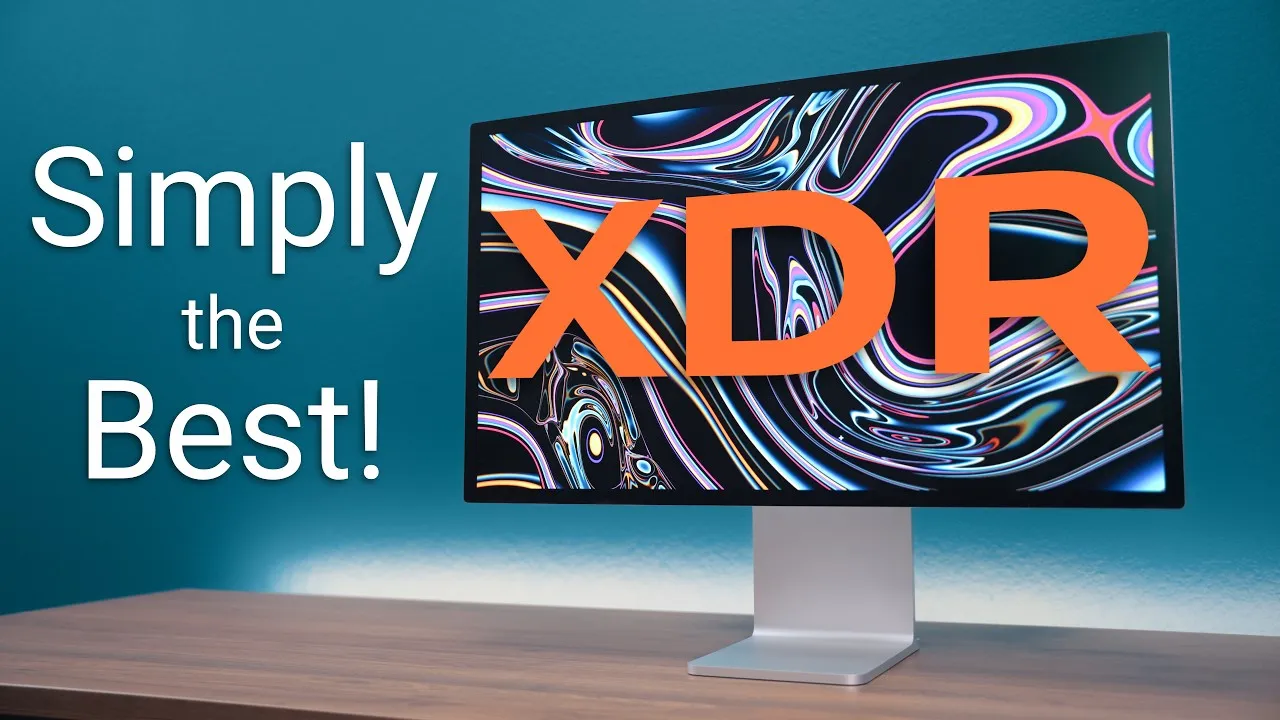
After three full months, the Apple Studio Display is the single best external display I’ve ever used with a Mac, which is good, but also bad. Apple’s first first-party display in years is so good that no other displays on the market match it. It isn’t perfect, but pound for pound there’s no better external display for Mac.
What it is not
It isn’t an everyday PC display, a cheap display or a feature-checklist display.
- No HDMI or DisplayPort inputs, and it won’t play perfectly with a Windows PC (for example, you can’t adjust the brightness in Windows). There’s no on-screen menu or button for settings; everything is adjusted from a Mac.
- 60 Hz only, no high refresh rate like gaming displays or Apple’s own ProMotion displays.
- No HDR. It’s an edge-lit LED panel with no local dimming or per-pixel dimming like OLED. It looks good, with much better uniformity and contrast than cheap displays at Amazon or Costco, and plays HDR content on YouTube, but it’s not really HDR.
What’s not so great
- The camera. The built-in ultra wide camera is not good. The video looks grainy, soft and artificial, no matter the light, even after the software update that was supposed to fix it. It has Center Stage, which I don’t see as more important than picture quality. The camera on the M1 iMac, a much thinner device, is exponentially better.
- Software updates. The display runs an A13 chip that controls the video, camera, mics and speakers, so it gets software updates like an iPhone, but it’s strange to have a desktop display unusable for 20 minutes or more during an update.
- Price. $1,600 with the tilt-adjustable stand or a VESA mount, and you can’t change your mind later without an Apple Store paying to swap it. The height-and-tilt stand costs $400 more, and the nano-texture anti-glare option is $300 more. At the base price you could get 3 to 5 4K displays.
- Availability. More than three months after release, a new order meant a 10 to 12 week wait.
What’s great
- Build quality. All aluminum, with a big black Apple logo on the back and uniform bezels. I love the clean stand, which isn’t plastic, colored or covered in logos, and the perforations for fans and speakers. Walking into my office and seeing it on my desk makes me feel good.
- The stand. Other than the Pro Display XDR, no display’s stand is this fluid. You can adjust height and tilt with one finger and get it right the first time, unlike rigid stands that always move a little too far.
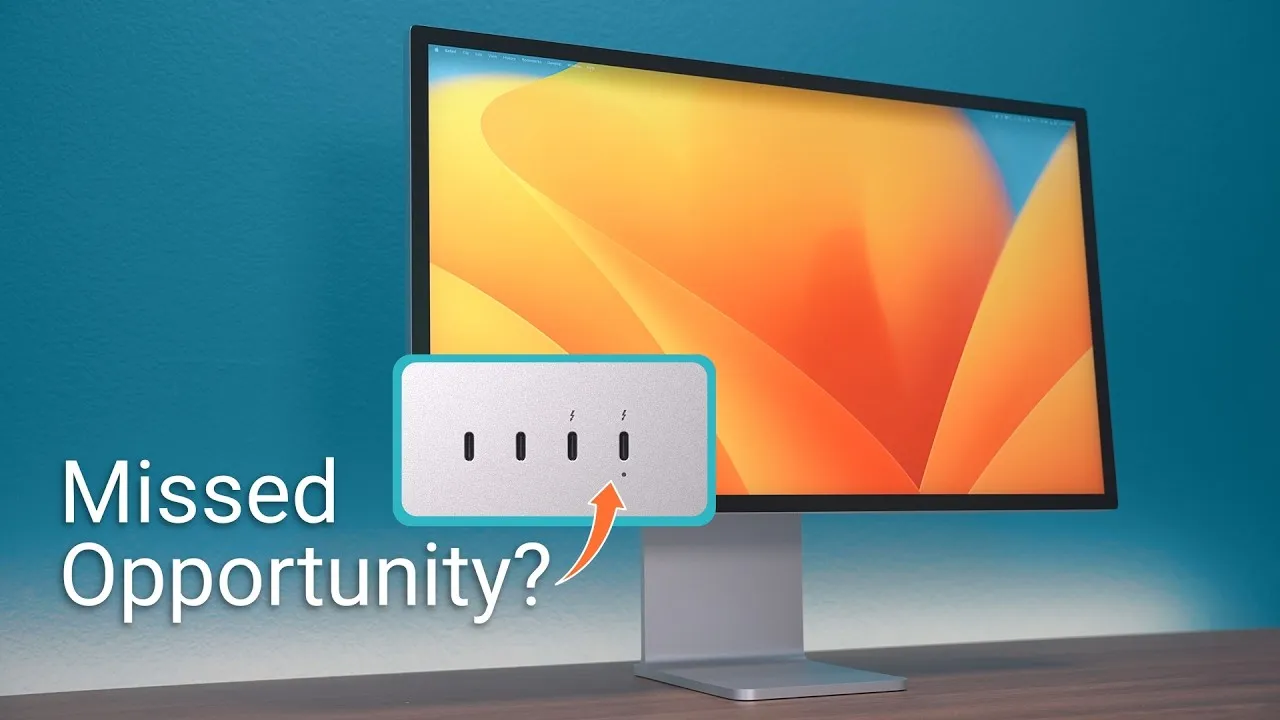
- Ports. A built-in USB-C hub with three ports (up to 10 Gbps) next to the Thunderbolt connection, good for an SSD and a mouse dongle. I also use a CalDigit Thunderbolt 4 dock for more ports and SD card readers.
- Built-in camera and mic. The camera isn’t great, but if you don’t use it a lot, having one means no external USB camera sitting on top as an eyesore, and it just works in any video call app.
- Speakers. Fantastic: clear, loud enough and full, with more bass than the form factor should deliver, filling my 14-by-14-foot office. They’re the best built-in speakers I’ve used on any computing device (good external speakers still give more volume and response), and I haven’t connected my Kanto YU2 speakers since. Camera, mic and speakers built in means a cleaner setup than any other display.
- The panel. A 5K panel (5120 by 2880 pixels, 218 ppi), more than any other 27-inch display, and at default macOS settings, every drawn pixel is displayed by four physical pixels, so images and text are much sharper. I’ve spent years trying displays and nothing is as crisp at 27 inches except the 5K iMac.
- Brightness. Up to 600 nits, the brightest SDR I’ve seen on an external display. I can’t use it at max because it burns, so I run it around 50%. Most sub-$1,000 displays are in the 250 to 350 nit range.
- Color. Factory calibrated for P3 wide color. For regular people, that means Apple tries to make all their displays look the same, so a photo looks the same on every Apple device. Since most of my viewers watch on an Apple device, my edits should look basically the same on their end.
Why it’s the best, and why that’s bad
The number one reason it’s the best display I’ve used with a Mac: it works. It turns on every time I wake the Mac, with no delay, flicker, distortion or other anomalies. I still get comments every day on previous videos about display issues with Macs; the problems aren’t limited to M1 or Intel and go back at least to Catalina, and many people need constant troubleshooting to get a third-party display working. The Studio Display hasn’t had one issue in three months.
That’s bad because it shows Apple isn’t putting in the effort to make industry-standard displays work as well with macOS as its own, and it makes the $1,600 price that much worse. It’s up to you whether simplicity, usability and the best build quality justify it, but if so, there are no other contenders. If you want to see what pairs well with it, check out my desk accessories video.
Links
- Get the Studio Display
- Other Desk Accessories
- Display Issues
- My Thoughts on the M2 MacBook Air
- My iPhone Art
- UNLIMITED Cloud Backup for your Mac with Backblaze
- Best Laptop
- Best iPad
- Mac Studio
- Studio Display
- Bamboo Monitor Stand
- CalDigit TS4
- Synology NAS
- RocketQ NVME SSD
- ACASIS NVME enclosure
- OWC Envoy Pro FX SSD
- Logitech MX Keys Mini
- Apple Magic Trackpad
- Logitech MX Master 3
- AirPods Max
- AirPods Max Stand (ETSY)
- Kanto YU2 Speakers
- Satechi Magnetic Charger 2-in-1
- My Camera
- Secondary Lens
- Sennheiser MKH-416 mic
- Zoom F6 recorder
- Rode VideoMic NTG
- Used DJI OSMO 3 Gimbal for some shots
- Tascam DR-10L Audio Recorder with Lav
In this video
Some links in this post are affiliate links, which means that if you click on one of the product links, I may receive a small commission. See my ethics statement.