16" MacBook Pro vs 5k iMac: Which is a better desktop?
My 27-inch iMac is the computer I keep going back to over the last year. The 16-inch MacBook Pro with M1 Max is the new kid on the block, with a new design, a flashy processor and a ProMotion display. Can it finally replace the iMac for my desktop use? I compare the 2020 iMac (i7, Radeon Pro 5500 XT) with the MacBook Pro.
Design
Both are all-in-one: a display, keyboard, mouse (or trackpad), camera, speakers and microphone, with nothing else needed. The iMac is large, with big black bezels, a big chin, an aluminum base, ports around back, and weighs about 20 pounds. The MacBook Pro is a classic clamshell, grown up: thinner bezels with a notch, a black-on-black keyboard, a big trackpad and ports on both sides, at less than 5 pounds.
Screen
- iMac: 27-inch 5K, rendering at 2560 by 1440 at true 2x Retina, 500 nits, 1200:1 contrast, P3 wide color and True Tone.
- MacBook Pro: smaller, but with more features: up to 1,600 nits for HDR, about 2,500 local dimming zones (mini-LED), 1,000,000:1 contrast and a variable 120 Hz ProMotion display, plus P3 and True Tone.
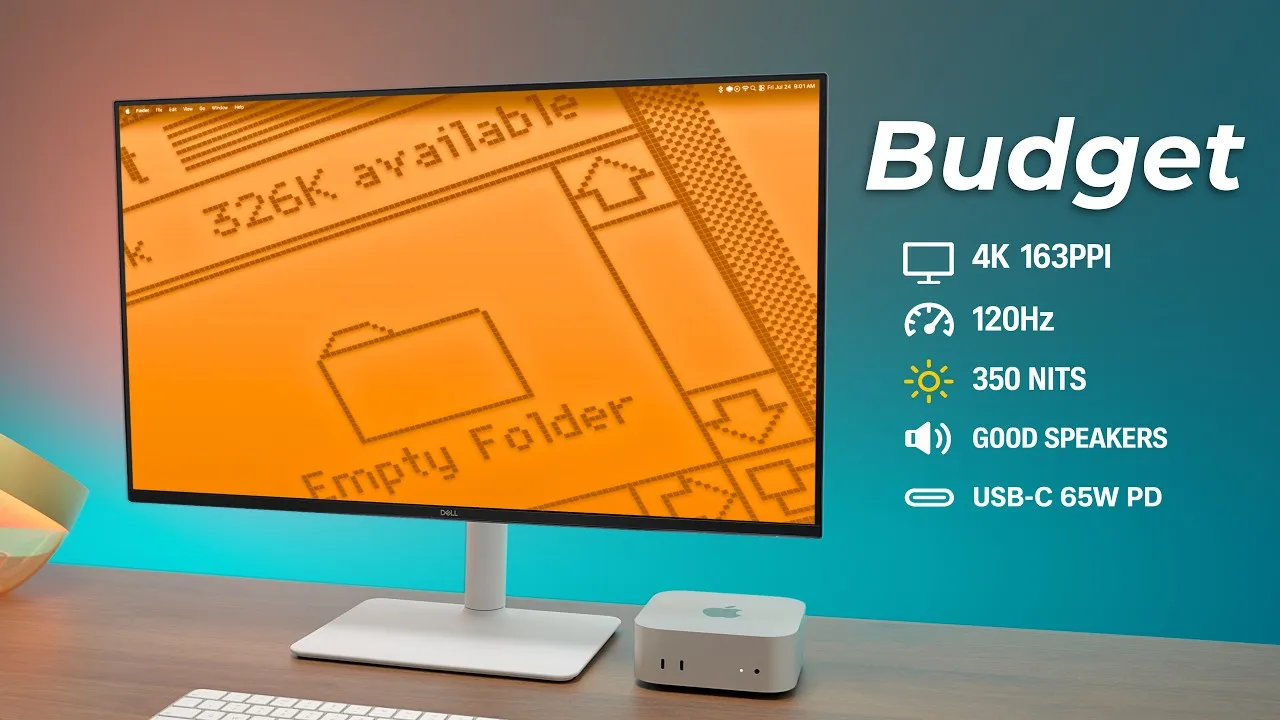
Each has the best overall, well-rounded display for its class. The MacBook Pro’s wins on features and performance, but it’s small on a desk setup; the 27-inch size feels right to me. You can add a 27-inch 4K display to the MacBook Pro (there are many, like a Dell) scaled to the same resolution, but it won’t be as sharp, bright or consistent as the iMac’s. There’s a 5K LG option, but by today’s standards it looks pretty bad and lacks Apple-level consistency.
Speakers
Both got upgrades: the iMac gained the T2 chip for enhanced bass response (really good on a wood desk), and the 16-inch has a six-speaker system with force-canceling woofers. In my opinion the iMac is much louder and bassier, but the MacBook has more clarity in the highs.
Ports
- MacBook Pro: Thunderbolt ports, a headphone jack, an SD card slot, HDMI out, and dedicated MagSafe charging.
- iMac: Ethernet, two Thunderbolt ports, four USB-A ports, an SD slot and a headphone jack.
The iMac wins: I like Ethernet at my desk and still use some USB-A devices. If neither has what you need, a Thunderbolt dock adds ports.
Keyboard and mouse
The MacBook has a massive built-in trackpad and the redesigned Magic Keyboard without a Touch Bar. The iMac can come with a Magic Mouse or trackpad and a Magic Keyboard. At a desk I use both a mouse (for precision editing and flying around the interface) and a trackpad (for pinch-to-zoom and three-finger swipes). The new MacBook keyboard has Spotlight, dictation and Do Not Disturb keys that I love almost as much as Touch ID, which is fast. But at a desk, using the MacBook keyboard for long periods stresses my arms, shoulders and forearms because of how far back it sits behind the massive trackpad; I like the keyboard near the front of the desk, which I can do with the iMac’s external keyboard, though unless I buy a new one I’m stuck with the old layout, including a CD eject key that does nothing.
Camera and mics
After almost two years of a pandemic, both finally have updated 1080p cameras and “studio-quality” microphones for all the calling services. Compared with a couple of years ago, both have seen big improvements. Which looks and sounds better to you?
Performance
On paper, the M1 Max wins pretty much every benchmark: its 24-core GPU is a little ahead on graphics, and the 32-core GPU gets about a 50% jump. Chip-specific features such as video encoding can shave minutes off my Final Cut exports, though the Intel chips do certain things faster too, such as Thunderbolt SSD speed, as in my test of four drives. Despite the numbers, they aren’t far apart in my daily use, and neither feels slow (“does 150 mph feel a lot slower than 120?”). Compared with last year’s M1 MacBook Pro, the iMac felt faster at times and was in multi-core and graphics tasks, but I haven’t felt hesitation from the M1 Max versus the iMac. Both seem to have Final Cut issues lately, which I think is a Final Cut issue, not hardware.
Benefits
- iMac: can run full x86 Windows in Boot Camp, and with the 5500 XT or 5700 XT you can do real Windows gaming. Memory is easily expandable through the back door, up to 128 GB, and, as a desktop, it needs little else for an ergonomic setup.
- MacBook Pro: can run iOS apps on Apple silicon (I’ve found few that I need on a Mac), and it’s a laptop, so you can take your desk anywhere.
Price
- 16-inch M1 Max MacBook Pro: from $3,099 (10-core CPU, 24-core GPU, 32 GB and 512 GB).
- 27-inch iMac (i7): from $2,299 (8-core CPU, Radeon Pro 5500 XT, 8 GB and 512 GB). Specced to 32 GB to match, it’s $2,900, only a $200 difference, but memory can be expanded later with third-party RAM: about $130 from OWC instead of $600 from Apple. Keep an eye on the Apple refurb store for more savings (I highly recommend it).
Verdict
For desktop Mac use, the 27-inch iMac still wins my heart: the big 5K display, the cleanliness of an all-in-one and performance that’s more than acceptable for most people. I could use the MacBook Pro with an external display, keyboard and mouse, but I’d likely be stuck with a sub-par main display, though I’d have the latest and greatest and Touch ID. Honestly, I still can’t decide; I love them both. Are you an iMac desk person or do you prefer the options of a laptop?
Links
- UNLIMITED Cloud Backup for your Mac with Backblaze
- Buy a 16” MacBook
- Buy a 14” MacBook Pro
- 2020 iMac
- OWC 32 GB Kit (2x16GB) for 2019-2020 iMac
- Bamboo Monitor Stand
- Dell S2722QC
- LG Alternative Display
- Dell Display Alternative Factory Calibrated
- BEST SSD for MacBook Pro
- CalDigit TS3 Plus
- Sony A6400
- Primary Lens Sigma f1.4 16mm
- Secondary Lens Sony f2.8 16-55MM G
- Sennheiser MKH-416 mic
- Zoom F6 recorder
- Rode VideoMic NTG
- iPad Pro 12.9
- Used DJI OSMO 3 Gimbal for some shots
- Tascam DR-10L Audio Recorder with Lav
Some links in this post are affiliate links, which means that if you click on one of the product links, I may receive a small commission. See my ethics statement.