Apple MagSafe Battery Pack VS Anker PowerCore Magnetic! Twice as Good?
Apple finally released a MagSafe battery pack for the iPhone 12, about nine months after the phone, for $99. The Anker PowerCore Magnetic 5K wireless charger costs half as much. They each have features the other lacks, so should you pay twice as much?
In the box and design
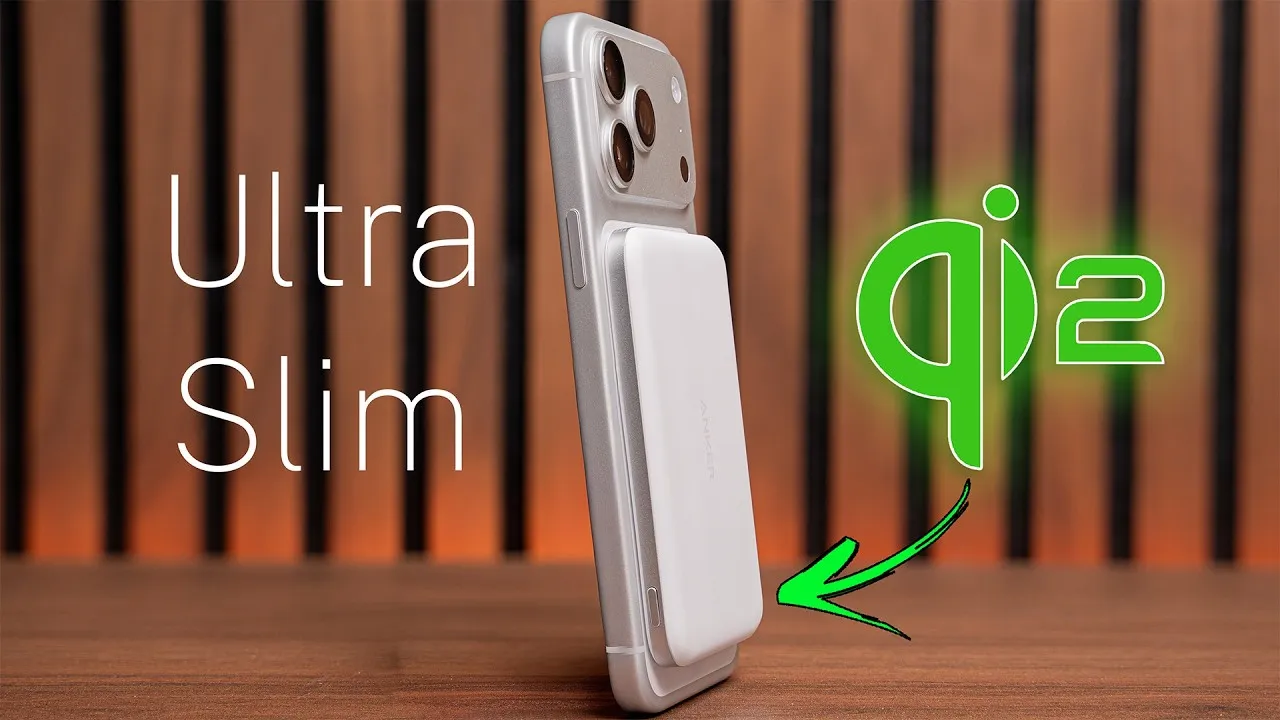
The Apple box has nothing but the battery. The Anker includes a USB-C cable. They’re nearly the same size, hard plastic and well made, but the Anker is a little thicker and heavier: about 130 g vs. 113 g for Apple’s. Both have a charging port and status lights on the bottom, but the Anker also has a power switch.
Status lights
Apple’s LED only lights momentarily when you connect or disconnect a cable or the phone: green if charged, amber if low, with no indicator while in use. The Anker has four LEDs (25, 50, 75 and 100%) plus a blue light indicating charging or discharging, so you get more visual feedback.
Attaching
Both have magnets that align with the iPhone and snap on, and both feel equally sturdy. One interesting thing with Apple’s: as it approaches the phone, you feel and hear a click, as if something moves forward inside. Maybe that tells the iPhone it’s a MagSafe-compatible battery and enables 15 W charging; I’m curious about the teardown.
Capacity and ports
- Apple: two 1,460 mAh cells, just under 3,000 mAh total, with Lightning for charging.
- Anker: 5,000 mAh, with USB-C.
So you get more juice from the Anker.
Apple’s advantages
- iOS integration after updating to iOS 14.7: you can see the battery pack’s charge percentage on the iPhone.
- Pass-through and reverse charging with Lightning: plug a cable into the battery pack and it charges and charges the iPhone wirelessly at the same time; plug a cable into the iPhone, and it charges the battery pack.
- Speed: charging wirelessly with no cable, Apple’s pack charges the iPhone at about 5 W. With an iPhone 12, 12 Pro or 12 Pro Max and a 20 W adapter plugged into the pack, you get up to 15 W MagSafe charging.
Anker’s advantages
- It charges the iPhone at up to 5 W wirelessly, whether or not it’s plugged in (you can charge the pack and the phone at the same time).
- You can charge any device by wire: connect an iPhone with a cable for 10 W, and charge an Apple Watch, iPad or anything else that charges at 10 W. With USB-C, if you have a MacBook Pro and an iPad Pro or Air, you can carry one cable.
Other devices
Both charge other devices with standard Qi charging: AirPods charge on both, and an iPhone 11 charges wirelessly from either if you line up the coils just right (the tricky part).
Charging tests
On my iPhone 12 Pro (sitting unused, so your mileage will vary with heavy use or a 12 mini or Pro Max):
- Apple: 5% to about 66% in just over two hours.
- Anker: 5% to 99% before dying at around three and a half hours.
Recharging the packs with a 20 W Apple adapter: Apple’s took one hour to reach 100%, Anker’s about three hours.
Warranty
Apple’s comes with a 12-month warranty; Anker’s 18 months.
Verdict
For $99, Apple’s pack gives iOS integration, battery indications on the phone, and the option to plug in a Lightning cable to wirelessly charge the phone at up to 15 W. The Anker charges at 5 W wirelessly, but gives a bigger battery and more charge, and USB-C lets you charge wired devices. Which features do you want?
Links
- The first 1,000 people to use this link will get a 1 month free trial of Skillshare
- Buy Apple MagSafe Battery
- Buy Anker PowerCore Magnetic
- UNLIMITED Cloud Backup for your Mac with Backblaze
- Buy the 2020 iMac
- Bamboo Monitor Stand
- CalDigit SOHO
- CalDigit TS3
- Samsung X5 Thunderbolt SSD
- OWC 32 GB Kit (2x16GB) for 2019-2020 iMac
- MX Master 3 Mouse
- Satechi Magnetic Charger 2-in-1
- BenQ ScreenBar
- Kanto Yu2 Speakers Matte Gray
- Apple Magic keyboard
- Apple Magic Trackpad
- MX Master 3 Mouse
- Desk Mat Moko PU Leather
- MacBook Pro M1
- Samsung UR55 28” display
- MountUP Monitor Arm
- If this was helpful I have a tip jar
- Sony A6400
- Primary Lens Sigma f1.4 16mm
- Secondary Lens Sony f2.8 16-55MM G
- Sennheiser MKH-416 mic
- Zoom F6 recorder
- Rode VideoMic NTG
- iPad Pro 12.9
- Used DJI OSMO 3 Gimbal for some shots
- Tascam DR-10L Audio Recorder with Lav
In this video
Some links in this post are affiliate links, which means that if you click on one of the product links, I may receive a small commission. See my ethics statement.